

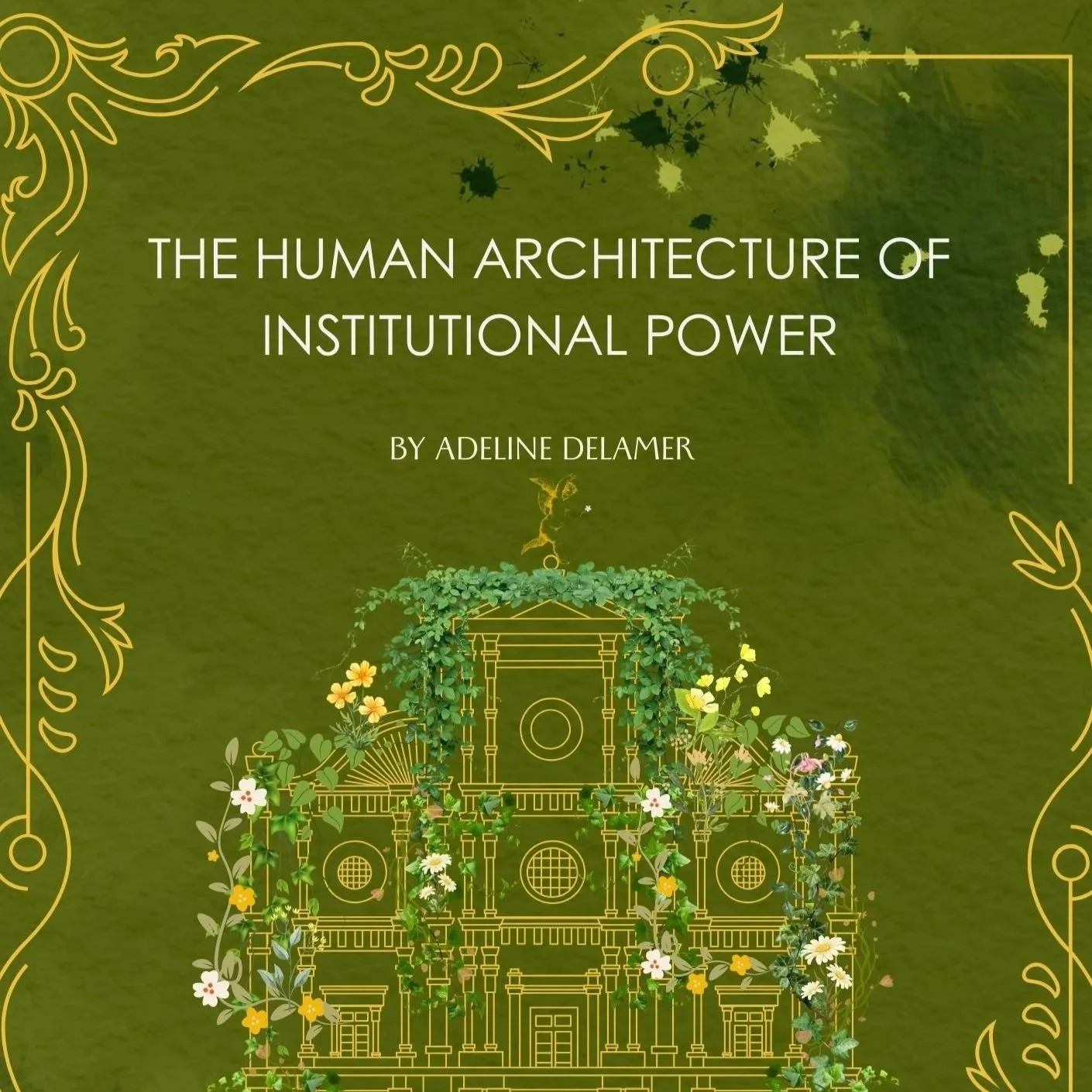
 Image 1 of 1
Book Three in the On Governance Series
Something is wrong inside most institutions. Leaders can feel it. The strategies look sound. The structure is intact. But the system keeps producing the same failures, the same exhaustion, the same hollowness that no reorg or retreat seems to fix.
This book names what is missing.
The Human Architecture of Institutional Power™ treats institutions the way a physician treats the body. Not as machines to be optimized, but as living systems that breathe, metabolize, carry memory, and fall ill. Culture is skin. Structure is skeleton. Capability is muscle. Coordination is connective tissue. And like any body, an institution has pathologies — congestion, inflammation, numbness, collapse — that can be identified, mapped, and treated.
Most leadership frameworks were built for a calmer era. They taught strategy without psychology. Efficiency without empathy. Control without any reckoning with what it costs the people inside the system. This book fills that space.
Each chapter offers a clear view of one of the hidden systems that governs institutional life — nervous, ethical, circulatory, emotional, cognitive — and a treatment protocol for leaders who need more than diagnosis. Who need a way through.
The book then moves outward, into the public systems that shape society itself: justice, politics, education, media, health, diplomacy. Because the same anatomy applies. And the same repair is possible.
This is not a business manual. It is structural literacy for people who carry real weight — founders, managing partners, public servants, anyone whose decisions shape the lives of others.
If you have ever sensed that the system you lead is capable of more than it is producing, this book gives you the language and the map.
The On Governance Series traces the full arc of power — from the inner ground of grace, to the moral mechanics of decision, to the architecture that holds or breaks a collective. Each book stands alone. Together they form a complete education in how power forms, fractures, and restores itself.
Book Three in the On Governance Series
Something is wrong inside most institutions. Leaders can feel it. The strategies look sound. The structure is intact. But the system keeps producing the same failures, the same exhaustion, the same hollowness that no reorg or retreat seems to fix.
This book names what is missing.
The Human Architecture of Institutional Power™ treats institutions the way a physician treats the body. Not as machines to be optimized, but as living systems that breathe, metabolize, carry memory, and fall ill. Culture is skin. Structure is skeleton. Capability is muscle. Coordination is connective tissue. And like any body, an institution has pathologies — congestion, inflammation, numbness, collapse — that can be identified, mapped, and treated.
Most leadership frameworks were built for a calmer era. They taught strategy without psychology. Efficiency without empathy. Control without any reckoning with what it costs the people inside the system. This book fills that space.
Each chapter offers a clear view of one of the hidden systems that governs institutional life — nervous, ethical, circulatory, emotional, cognitive — and a treatment protocol for leaders who need more than diagnosis. Who need a way through.
The book then moves outward, into the public systems that shape society itself: justice, politics, education, media, health, diplomacy. Because the same anatomy applies. And the same repair is possible.
This is not a business manual. It is structural literacy for people who carry real weight — founders, managing partners, public servants, anyone whose decisions shape the lives of others.
If you have ever sensed that the system you lead is capable of more than it is producing, this book gives you the language and the map.
The On Governance Series traces the full arc of power — from the inner ground of grace, to the moral mechanics of decision, to the architecture that holds or breaks a collective. Each book stands alone. Together they form a complete education in how power forms, fractures, and restores itself.